
An outsourced SDR in Australia typically costs $3,000 to $15,000 per month on a retainer, or roughly $200 to $600 per qualified meeting on a pay-per-appointment model. By comparison, a single in-house SDR usually costs $120,000 to $180,000 or more per year once you include salary, superannuation, tools, management and ramp time. The right number for your business depends on the channels you run, the seniority of the rep and how a provider defines a qualified meeting.
The three ways outsourced SDRs are priced
Across the Australian market, most providers price one of three ways.
- Monthly retainer ($3,000 to $15,000 per month). A flat fee covering a dedicated rep or team, data, tooling and campaign management. Single-channel email programs sit at the lower end. Multi-channel programs combining cold email, phone and LinkedIn, or dedicated multi-rep teams, sit at the top.
- Pay per qualified appointment ($200 to $600 per meeting). You pay only for booked meetings. This suits simple offers and high-volume markets, but quality lives or dies on how tightly the contract defines a meeting.
- Hybrid (a smaller base fee plus a fee per held meeting). A lower retainer covers infrastructure and operations, while the per-meeting fee keeps incentives aligned on output. The fee only applies to meetings that actually take place, not just meetings booked.
What an outsourced SDR retainer usually includes
A retainer is rarely just rep time. A properly scoped Australian SDR program generally covers:
- A dedicated SDR or team working on your accounts
- ICP definition and verified prospect data
- The tech stack (dialler, LinkedIn licences, intent data and CRM access)
- Messaging, sequences and objection handling
- Management, quality assurance and coaching
- Live reporting and weekly reviews
This is where quotes diverge. A $5,000 monthly figure can climb to $9,000 once data, onboarding and tooling left off the initial call are added back in. Before comparing providers, ask exactly what sits inside the retainer and what is billed on top. At J2 Group, data, tooling and campaign management are included in the retainer, with nothing billed on top.
Is outsourcing cheaper than hiring in-house?
For most B2B teams, yes, at least in the first year.
The base salary for a B2B SDR in Australia now sits around $65,000 to $95,000, with on-target earnings closer to $95,000 to $115,000 once commission is included. On top of that you carry superannuation (12% from July 2025), payroll tax (where applicable), a tool stack, recruitment and a manager’s time. A single in-house SDR also takes three to four months to reach full productivity, so you pay a full salary well before pipeline arrives.
Loaded up, a productive in-house SDR costs most Australian businesses $120,000 to $180,000 or more a year. The clearer comparison is cost per qualified meeting. A fully loaded in-house rep booking 10 to 14 meetings a month works out to roughly $800 to $1,150 per meeting. A $5,000 outsourced retainer delivering similar volume lands closer to $350 to $500 per meeting, provided those meetings are genuinely qualified and attended.
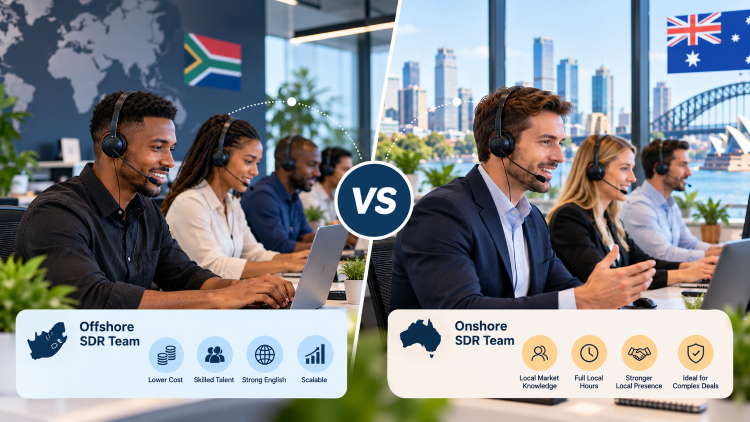
If budget is the priority, a dedicated offshore SDR team usually costs less than a local managed retainer, which is why some cost-conscious teams start there. Outsourcing also removes the ramp risk and the management overhead, which is often the real saving for a founder or a lean sales team.
The number that actually matters
Headline price is the wrong thing to optimise. A cheap retainer that produces unqualified meetings costs more than a higher one that fills your calendar with real opportunities. When you read a quote, look past the monthly figure to three things: cost per qualified meeting, how a qualified meeting is defined in writing, and what happens to the fee if the meetings stop.
At J2 Group, our Melbourne-based team runs managed Australian SDR programs on a scoped monthly model, with first outreach typically live around two weeks from kick-off. If you want a number matched to your market and target accounts, the quickest path is a short scoping conversation.